CODE OF ETHICS
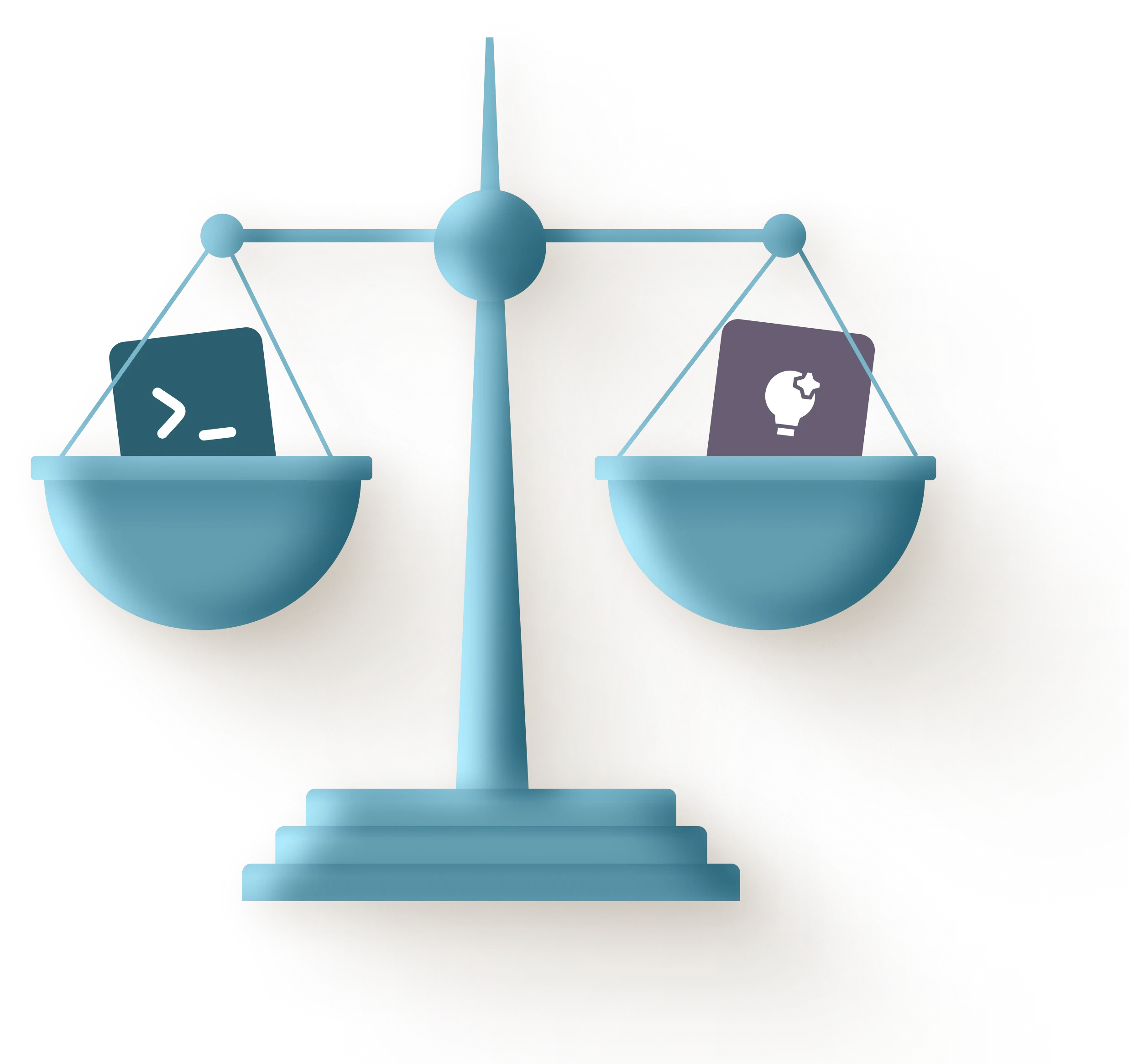

THE CODE OF AI ETHICS
Five rules we hold every 2Skills student to, and that we think everyone using AI should follow.
Safety · Bias · Privacy · Attribution
01
Protect Privacy
Don't put personal info, or other people's photos, into AI tools without permission.
02
Use Your Brain
Review, edit, and add your own thinking to everything AI produces.
03
Be Transparent
If AI helped make it, say so. Don't pass AI work off as fully your own.
04
Think About Impact
AI uses real energy and water. Use it on purpose, not on autopilot.
05
Use Your Voice
If you see AI used irresponsibly, say something.
What you actually need to get right
AI raises five questions worth slowing down for. Here's the short version of each.
Who owns what you make?
AI tools are trained on millions of images from real artists, many who never agreed to it. When you generate something, you may be building on someone else's work. Always check whether the tool says the output is yours, and whether you can use it publicly.

Samsung engineers pasted confidential code into ChatGPT to fix bugs. That data was absorbed into the model. Once it's in, it's in.




Can you trust what you see?
Deepfakes are AI-made photos, audio, or video of real people saying things they never said, already used for scams, fake endorsements, and misinformation. The rule: if something seems shocking, surprising, or too perfect, verify before you share. Sharing a fake, even by accident, harms real people.
Is the AI thinking, or are you?
AI is fast at patterns, options, and formatting. You're the one who brings judgment, ethics, and creative leaps. Hand your thinking to AI and you've given away your biggest advantage.
Students who used AI for writing scored lower on critical thinking over four months. The term for it: secondhand thinkers. They couldn't solve similar problems on their own. (MIT / Harvard, 2025)
Where does your data go?
Your name, address, school, and phone don't belong in a public AI chatbox. Most tools keep your prompts, so read the privacy policy before you type, and get consent before generating or editing images of real people.
71% of U.S. adults are concerned about personal data misuse by AI. (Pew Research, 2025)
What does it cost the planet?
Every prompt has an energy and water footprint. AI data centers are projected to reach 3% of global electricity by 2030. It's not a reason to never use AI, it's a reason to use it with purpose.
WHY 2SKILLS EXISTS
A clear prompt is the ethical prompt
Vague prompts waste energy on rounds of revision and hand the AI all the decisions. Specific prompts keep you in control of the result.
Revision #1
Revision #2
Revision #3
Revision #4

Weak
strong
The 2skills standard
Everything a 2Skills student builds carries the same three commitments: they can explain how they made it, they say where AI helped, and they can point to where their information came from. If you can't show your source, you don't ship the work.
Built by students. Checked by students. Owned by students.

