PROBLEM SOLVING SKILLS

THE PROBLEM-SOLVING PATH
Strong problem solvers do not rush to answers. They learn how to observe, question, organize, and test their thinking before deciding what to build.
01
NOTICE WHAT’S HAPPENING
Students learn how to observe the world around them and spot situations that feel confusing, inefficient, unfair, or worth improving.
02
DEFINE THE REAL PROBLEM
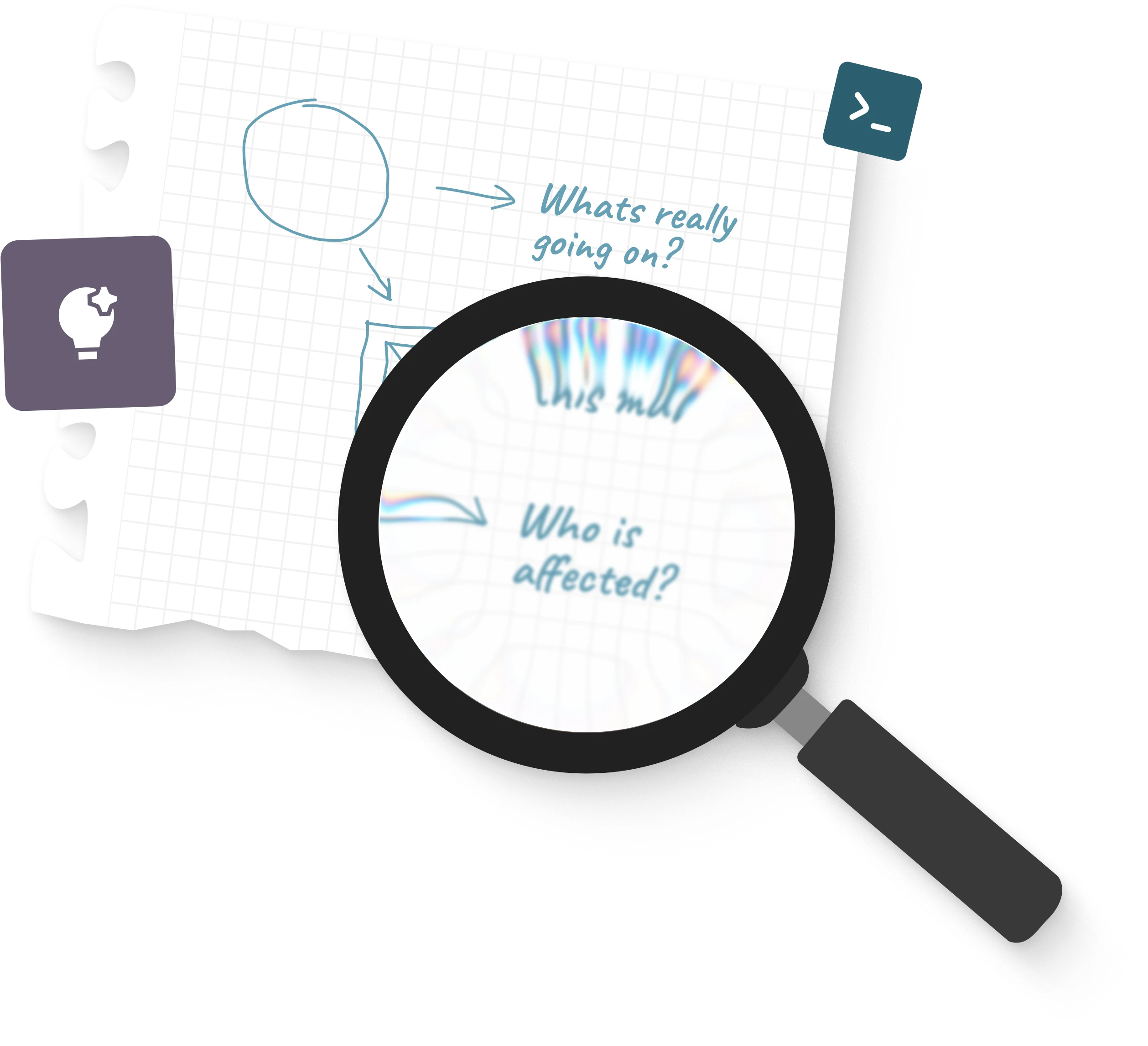
Before jumping to solutions, students ask who is affected, what is happening, why it matters, and what needs to change.
03
EXPLORE POSSIBLE CAUSES
Students look beneath the surface. They compare reasons, patterns, constraints, and assumptions so they can understand the problem more clearly.
04
TEST A BETTER SOLUTION
Students turn ideas into small experiments, prototypes, or project plans. They test what works, learn from feedback, and improve their thinking.
What SKILLS STUDENTS BUILD
Every problem-solving activity helps students practice habits they can use in school, projects, AI workflows, and everyday life.
Critical Thinking
Students learn to slow down, compare information, and make thoughtful decisions.
Question Design
Students practice turning vague ideas into focused, useful questions.
Systems Thinking
Students explore how people, tools, causes, and outcomes are connected.
Creative Solutions
Students generate multiple ideas, test possibilities, and improve their solutions over time.
FROM MESSY IDEAS TO CLEAR PROBLEMS
Students often begin with broad ideas, guesses, or complaints. 2Skills helps them slow down, separate symptoms from causes, and turn messy thoughts into clear problem statements they can actually work on.
Messy IDEA
Students are stressed about school.
Clear Problem
How might we reduce test anxiety for high school students?
Workshop 01
Messy IDEA
We waste too much food.
Clear Problem
How might we reduce food waste in our school cafeteria?
Workshop 02
Messy IDEA
Kids don’t feel included at lunch.
Clear Problem
How might we build a more inclusive lunch environment for all students?
Workshop 03
Messy IDEA
Our community needs more green spaces.
Clear Problem
How might we create more accessible green spaces in our neighborhood?
Workshop 03

